



Stimming is short for self-stimulating behavior, and many autistic people also call it self-regulating behavior. It covers the repeated movements, sounds and actions people use to stay calm, take in sensory input or show joy, such as hand flapping, rocking, humming or stroking a soft fabric.
If you are wondering what stimming is because you have noticed it in your child, a student or yourself, this guide explains why people stim, gives everyday examples and shows how to support stimming with understanding.
What stimming means and why people stim
Most people stim from time to time, and you probably do too. Clicking a pen in a long meeting, twirling your hair while you concentrate and jiggling your foot are all everyday examples. Stimming is most often discussed in relation to autism, but it also occurs in people without an autism diagnosis and can continue into adulthood (American Psychiatric Association). Autistic and other neurodivergent people, including people with ADHD, may stim more often. It can also matter more to their wellbeing, because it helps them cope with a world that can feel loud, bright and overwhelming.
Stimming can serve several purposes. In interviews, autistic adults described it as a way to soothe themselves and to express intense feelings and thoughts (Kapp et al., 2019). It can also help someone enjoy a sensation, get through sensory overload or let out built-up energy. Two people can do the same stim for different reasons, so one person may rock because they are distressed and another because it feels good.
The behavior is often beneficial and usually harmless, although some people need support when a stim causes harm (National Autistic Society).
Types of stimming with everyday examples
Stims are often grouped by the sense they engage. Some are easy to spot, like arm flapping or pacing. Others are so small that nobody else notices, such as blinking, wriggling your toes or silently repeating a word. The groups are only a guide, and one stim can engage several senses at once.
| Type of stimming | What it involves | Everyday examples |
|---|---|---|
| Auditory and vocal | Making, listening to or seeking out sounds | Humming, whistling, repeating words, phrases or noises |
| Visual | How you use your eyes and what you look at | Blinking, lining things up, watching a fan or a lava lamp |
| Tactile | Repeated actions that involve touch and texture | Hair twirling, skin rubbing, tapping, stroking soft objects |
| Vestibular (movement) | Moving the body to feel motion and balance | Rocking, spinning, swaying, pacing |
| Proprioceptive (body awareness) | Input to the muscles and joints that tells you where your body is | Squeezing an object, pressing your fingertips together, a firm hug |
| Oral and gustatory | Using the mouth or seeking out tastes | Chewing a pencil or shirt, seeking a specific flavor |
| Olfactory | Seeking out smells | Sniffing items, smelling the same object again and again |
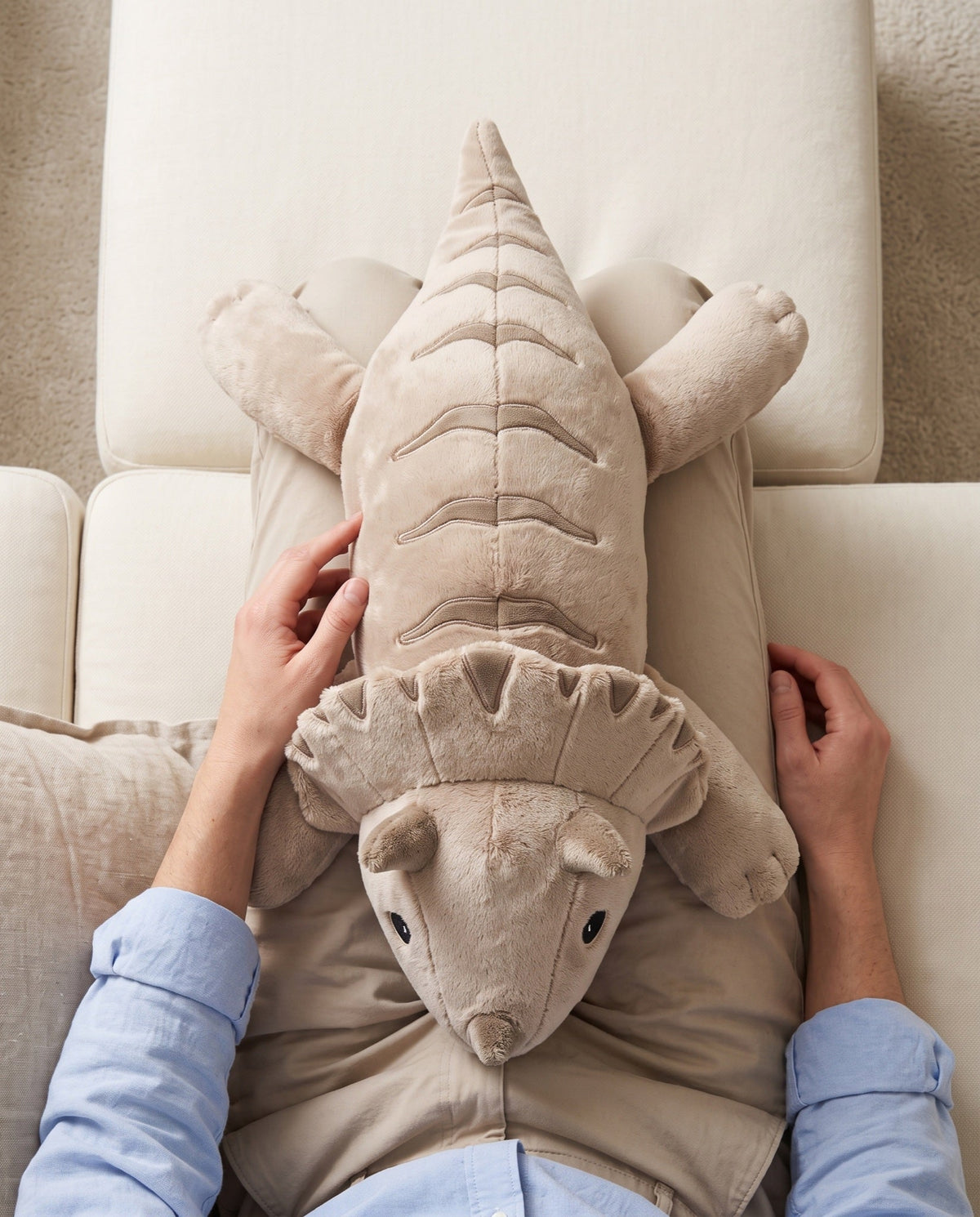
Proprioception is the sense that helps you understand where your body is in space, and it is the one many people forget. Firm pressure and squeezing engage it, which is one reason a tight hug or a heavy blanket can feel so settling. It is also the sense Brease weighted plushies are designed around.
Stimming in autism and ADHD
In autism, repeated movements and behaviors are part of "restricted and repetitive behaviors and interests", one of the two core characteristics in the criteria for a diagnosis. The diagnostic language can sound negative, but many autistic adults see stimming as useful and object to treatment that aims to eliminate it (Kapp et al., 2019).
Autistic women and girls may stim in quieter or more socially accepted ways, which can be one reason their autism goes unnoticed. People with ADHD may stim too, often to help them focus or release restlessness.
What is the difference between stimming and tics?
Stims and tics can look alike, but they tend to feel different. Tics are quick, repeated movements or sounds that are hard to control, and they often follow an unpleasant urge that builds up in the body until the tic relieves it (NHS). Stimming can also happen without much awareness, but it usually serves a purpose you can feel, such as calming down or enjoying a sensation.
Stimming can also be confused with the compulsions of obsessive-compulsive disorder (OCD). The same action can have very different reasons behind it. One person may flip a light switch again and again because they enjoy how it feels and looks, while someone with OCD may feel driven to do it to prevent something bad from happening. In general, compulsions feel distressing and unwanted, while stimming tends to feel soothing or enjoyable. If you are unsure which one you are seeing, a doctor or psychologist can help you tell them apart.
When stimming needs support
For a long time, stimming was treated as a problem to reduce, and children in schools were sometimes told to keep "quiet hands". Autistic people describe being made to stop as a form of enforced masking, which can lead to anxiety and distress. If a stim is harmless, there is no reason to prevent it.
Support is needed when a stim causes harm, such as picking skin or nails until they bleed, pulling out hair or hitting the head, or when someone is so absorbed that they walk into danger. Speak to a doctor if someone is injuring themselves. Support should start with what is causing the distress, because trying to stop the stim on its own can make things worse.
An occupational therapist can help find a safer stim that serves the same purpose. Where a harmful stim has a sensory cause, deep pressure is one alternative professionals may suggest, though not everyone responds to it in the same way.
How to support stimming at home, school and work
Supporting stimming mostly means making room for it. A few practical steps can help you, your child or a colleague stim safely and without shame:
- Allow safe stims. Let harmless rocking, flapping or humming happen without comment, so stimming does not become something to hide.
- Reduce the overload. Look at the noise, light, crowds or demands that trigger distress and change the environment where you can.
- Create a safe space to stim. A quiet corner at home or a calm room at school gives you or your child somewhere to stim without fear of judgment.
- Keep a sensory tool within reach. A fidget toy in a pocket or under a desk gives a discreet outlet in class or at work.
- Notice the build-up. Help your child, or yourself, recognize when energy or emotions are rising, and make time to stim before it tips into overwhelm.
Many people find that stimming early helps them stay focused and may help them head off a meltdown or shutdown.
Sensory tools that give stimming a safe outlet
The best sensory tool or stimming toy is the one that matches the sense a person is seeking. A chew toy suits oral stims, a swing suits movement, and repetitive music suits people who seek out sound. For tactile and proprioceptive stims, soft textures and deep pressure are a natural fit.
A weighted plush brings both together in one calm companion. The fur gives your hands something soft to stroke, rub or squeeze, and the weight resting on your lap or chest adds gentle pressure, much like a steady hug. Our weighted stuffed animals are filled with glass beads in six compartments, so the weight stays even while you squeeze, hug or fidget with them. Psychologists and therapists we work with also use them in their sessions.
A weighted plush is a comfort tool, not a treatment, and it works best alongside the support above. Our animals are suitable from age 3, provided your child can lift and move the animal away independently. Children should use them with an adult present and put them aside before they sleep. Always follow the supplied safety instructions.
Frequently asked questions
Is stimming a sign of autism?
Not on its own. Stimming is common in autism, but children and adults without autism stim too. If you have other concerns about your child's development or communication, talk to your doctor.
Is stimming a sign of ADHD?
Stimming can be part of ADHD, but on its own it is not a sign of any condition. Children repeat movements and behaviors for many reasons, so try not to jump to conclusions. If you have other concerns about attention or focus, ask your doctor about an assessment.
Should I stop my child from stimming?
If the stim is harmless, there is usually no need to stop it. If it causes injury or puts your child in danger, look at what may be causing the distress and speak to a doctor or occupational therapist about safer alternatives.
Is nail biting stimming?
Nail biting can be a stim when it helps you or your child self-soothe or concentrate, although it can also simply be a habit. It becomes a concern when it causes pain or bleeding. Offering something with a similar feel, such as a chewable necklace or a textured object to fiddle with, often helps more than being told to stop.
What is the most common stim?
There is no single most common stim, because each person stims in their own way. Clicking a pen, tapping, whistling and twirling your hair are examples almost everyone recognizes. Among autistic people, rocking, hand flapping and repeating words or sounds are often mentioned.
Give stimming room to happen
Stimming is a natural way to cope with stress, big emotions and overstimulation, and in most cases it deserves respect and room to happen. When you understand what a stim does for someone, you can support it, reduce what overwhelms them and offer safe options when they need one. At Brease, our mission is to bring rest, relief and genuine comfort into everyday life, and a soft, weighted companion can be one calming way to stim. Explore our weighted stuffed animals for kids and weighted stuffed animals for adults and find the animal that feels right to hold.
Please note: everyone stims differently, and not every suggestion in this guide will suit everyone. This article is general information and does not replace advice from a doctor, occupational therapist or other health professional.