




Why does one child cover their ears at a birthday party while another seems to crash into everything on purpose? Why do some adults find a scratchy label unbearable or feel calmer under a heavy blanket? The answer often lies in sensory processing, the way the brain takes in and makes sense of information from the senses.
This guide explains the 8 senses, including the lesser-known senses of body awareness and inner signals. It covers what sensory processing differences and sensory processing disorder mean, how they show up in autism, ADHD and highly sensitive adults, and how sensory input can help with regulation.
The short answer: we have eight sensory systems, not five: sight, hearing, touch, smell, taste, the vestibular sense (balance and movement), proprioception (body awareness) and interoception (inner body signals). Sensory processing differences mean the brain responds to this input more or less strongly than usual. Sensory processing disorder is a term used when those differences seriously affect daily life, but it is not an official diagnosis in the main diagnostic manuals.
What is sensory processing?
Sensory processing is how your nervous system receives signals from your senses, organizes them and turns them into a response. Most of the time, it happens without you noticing. Your brain filters out the hum of the fridge, adjusts your balance when the bus brakes and tells you that you are hungry before you think about it.
When sensory processing works differently, ordinary input can feel too loud, too bright or too much, or it can barely register at all. That affects how calm, focused and comfortable a person feels throughout the day.
The 8 senses
Most of us learn about five senses at school. Occupational therapists and sensory researchers describe eight sensory systems, adding three senses that work mostly in the background (STAR Institute).
| Sense | What it does | Everyday example |
|---|---|---|
| Sight (visual) | Takes in light, color, shape and movement | Reading, recognizing faces, noticing flickering lights |
| Hearing (auditory) | Takes in sound, volume and pitch | Following a conversation in a noisy room |
| Touch (tactile) | Registers texture, pressure, temperature and pain | Feeling a clothing label, a hug or cold water |
| Smell (olfactory) | Detects scents | Noticing perfume, food or smoke |
| Taste (gustatory) | Detects flavors | Liking or refusing certain foods |
| Vestibular (balance and movement) | Senses head position, movement and balance through the inner ear | Swinging, spinning, keeping your balance on a bike |
| Proprioception (body awareness) | Senses where your body is and how much force you use, through muscles and joints | Climbing stairs without looking, holding an egg without crushing it |
| Interoception (inner signals) | Senses what is happening inside the body | Noticing hunger, thirst, a full bladder, a racing heart or feeling hot |
Proprioception: the body awareness sense
Proprioception is the sense that tells you where your body is in space, without having to look. The National Autistic Society describes it as knowing where your body is in relation to other objects (National Autistic Society). Receptors in your muscles and joints constantly send signals to your brain about position, movement and pressure.
Proprioceptive input comes from activities that push, pull, lift, squeeze or press against the body, such as carrying shopping, climbing, a firm hug or the weight of a heavy blanket. For many people, this kind of input is organizing and calming. It helps the body feel its own edges and settle.
This is the main reason weight can feel so soothing. When steady, even pressure rests on your body, it stimulates both the sense of touch and proprioception, which makes you more aware of your body and its limits. Occupational therapists call this deep pressure, and it is the idea behind our weighted stuffed animals.
Interoception: the sense of inner signals
Interoception is your awareness of internal states: knowing whether you are hungry, thirsty, hot or cold, need the toilet, are ill or injured (National Autistic Society). It also helps you notice the bodily signs of emotions, such as a tight stomach when you are nervous or a racing heart when you are scared.
When interoception works differently, a child may not notice they need the toilet until it is urgent, or an adult may not realize they are anxious until they are already overwhelmed. Learning to tune in to body signals can be an important part of managing emotions.
What is sensory processing disorder?
Sensory processing disorder (SPD) is a term used when difficulties with sensory input are so significant that they get in the way of everyday life, such as dressing, eating, learning, sleeping or socializing. The STAR Institute, which works with sensory processing, cites studies suggesting that 5 to 16% of children show symptoms (STAR Institute).
It is important to know that SPD is not an official diagnosis in the main diagnostic manuals. The American Academy of Pediatrics has advised that, because there is no universally accepted framework for diagnosis, sensory processing disorder generally should not be diagnosed on its own. They also point out that sensory difficulties are common in many conditions, including autism, ADHD, developmental coordination disorder and childhood anxiety, and that these should always be considered (American Academy of Pediatrics, 2012).
That does not make the experiences less real. Many people find it useful to talk about sensory processing differences, and an occupational therapist can assess sensory needs and suggest practical strategies, whatever the label.
Over-responsive and under-responsive senses
Sensory differences usually fall into two broad patterns, and the same person can have both, depending on the sense.
- Over-responsive (hypersensitive). Input feels too strong. Noise can be painful, light glaring, clothing itchy and certain food textures unbearable. People may avoid busy places or cover their ears.
- Under-responsive (hyposensitive). Input barely registers, so the person seeks more of it. They may crave movement, crash into things, chew on objects, love tight hugs or not notice pain or temperature.
Sensory processing in autism
Sensory differences are very common in autism, and over- or under-reactivity to sensory input is part of the diagnostic criteria. The National Autistic Society explains that autistic people may experience input from the senses differently from other people, and that some environments, especially those with a lot of sensory input you have little control over, can be particularly challenging.
Stimming, such as rocking, flapping or humming, is often a way of managing sensory input.
Sensory processing in ADHD and in adults
Many people with ADHD also describe sensory sensitivities or a strong need for movement and input. Sensory differences are not limited to children or diagnoses, either. Some adults have always been bothered by noise, light or textures, or feel calmer when they get firm pressure, without ever having a name for it. Understanding your own sensory profile can make it easier to plan your day, your home and your work around what you need.
What is sensory overload?
Sensory overload happens when there is more sensory input than the brain can process. It can be triggered by one intense thing, such as a fire alarm, or by many small things at once, such as a crowded shop with music, bright lights and strong smells.
Autistic people have described the signs of sensory overload as not speaking or communicating, appearing disengaged, having difficulty focusing, stimming, pacing or rocking, higher sensitivity than usual and strong physical and emotional responses such as crying, shouting, running away or resisting touch (National Autistic Society). If overload is not relieved, it can lead to a meltdown or shutdown.
How to support sensory needs
The aim is not to remove all sensory input, but to find the right amount and type for each person. A few ideas that many people find helpful:
- Reduce what overwhelms. Ear defenders or noise-cancelling headphones, sunglasses or softer lighting, and tag-free clothing.
- Add calming input. Deep pressure from a hug, a weighted plush or a weighted blanket, pushing against a wall or carrying something heavy.
- Allow movement. Swinging, rocking, walking breaks or a wobble cushion for people who seek vestibular input.
- Create a calm space. A quiet corner with dimmed light and soft textures where someone can recover.
- Plan ahead. Visit busy places at quieter times and build in breaks after demanding activities.
The National Autistic Society lists weighted blankets among items autistic people have found helpful, and notes that the Royal College of Occupational Therapists recommends an occupational therapist assess their use so you can make an informed choice.
Where weighted comfort fits in
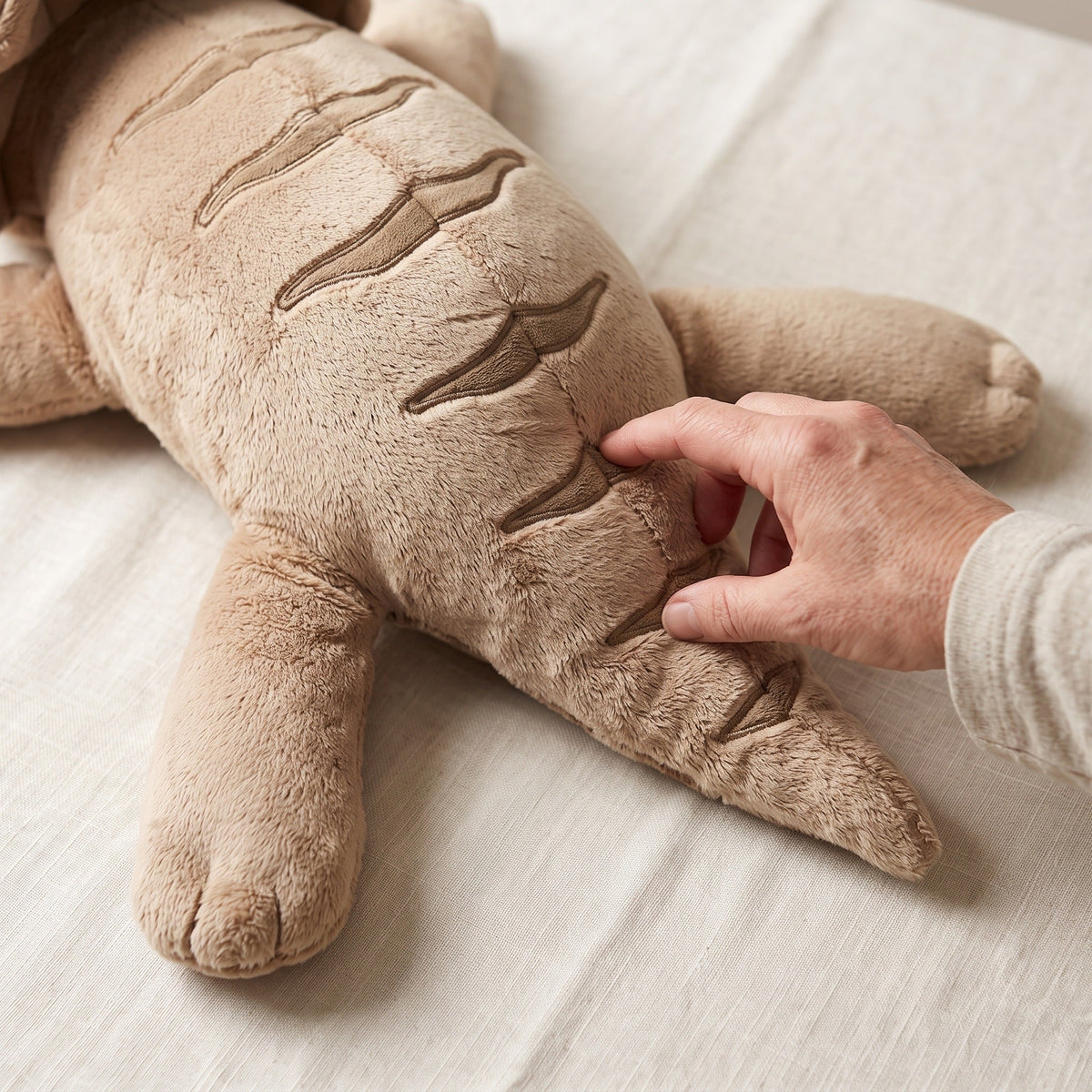
A weighted plush brings proprioceptive and tactile input together in one small, portable companion. The soft fur gives your hands something to stroke, and the weight resting on your lap or chest adds gentle, steady pressure. Our weighted animals are filled with glass beads in six compartments, so the weight stays even while you hug, squeeze or hold them.
A weighted plush is a comfort tool, not a treatment. Our animals are suitable from age 3, provided your child can lift and move the animal away independently. Children should use them with an adult present and put them aside before they sleep. Always follow the supplied safety instructions.
Frequently asked questions
What are the 8 senses?
The eight senses are sight, hearing, touch, smell, taste, the vestibular sense (balance and movement), proprioception (body awareness) and interoception (awareness of inner body signals such as hunger, thirst and temperature).
What are the signs of sensory processing disorder in adults?
Adults with sensory processing differences may find noise, light, smells or textures overwhelming, avoid crowded places, feel exhausted after busy days or seek out strong input like tight clothing, heavy blankets or constant movement. If it affects daily life, an occupational therapist or doctor can help.
Is sensory processing disorder a form of autism?
No. Sensory processing differences are very common in autism, but they can also occur in ADHD, anxiety and in people without any diagnosis. Having sensory sensitivities does not mean a person is autistic.
Why does weight feel calming?
Steady pressure stimulates the senses of touch and proprioception, which gives your brain clear information about where your body is. Many people find this organizing and calming, and describe it as feeling securely held.
Can you grow out of sensory processing issues?
Some children become less sensitive as they grow and learn coping strategies, while others continue to have sensory differences as adults. With understanding and the right adjustments, most people can find ways to live comfortably with their sensory profile.
Understand the senses, find the calm
Sensory processing affects how we feel in our bodies, our homes and the world around us. When you know about all eight senses, especially proprioception and interoception, many reactions start to make sense: the need to cover your ears, the craving for a tight hug or the sudden calm under something heavy. At Brease, our mission is to bring rest, relief and genuine comfort into everyday life, and steady, gentle weight can be one way to give the senses what they need. Explore our weighted stuffed animals for kids and weighted stuffed animals for adults and find the one that feels right to hold.
Please note: everyone processes sensory input differently, and not every suggestion in this guide will suit everyone. This article is general information and does not replace advice from a doctor, occupational therapist or other health professional.